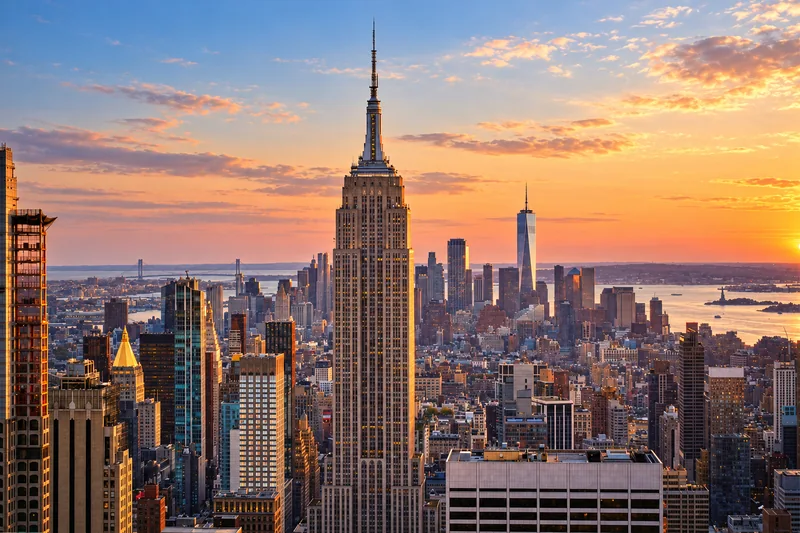
Start with Top of the Rock for a classic skyline with the Empire State Building in the frame, if outdoor viewing suits your group. Switch when another experience matters more: the Empire State Building itself, One World's enclosed Downtown panorama, Edge's glass-floor drama or SUMMIT's mirrored art.
Choose one paid observation-deck experience. The five options help you choose that visit.
In this guide
Pick the reason you want to go
| Option | Choose it when | Main trade-off |
|---|---|---|
| Top of the Rock | You want the classic Midtown skyline, including the Empire State Building | Outdoor viewing is part of the appeal; wind, temperature and group comfort matter. |
| Empire State Building | Being inside the icon, its museum and Art Deco character are the priority | Your skyline photograph cannot include the full building you are standing on. |
| One World Observatory | You want an enclosed Downtown panorama and harbour views through glass | Indoor shelter still leaves the skyline dependent on visibility. |
| Edge | You want the projecting outdoor deck, angled glass and glass-floor sensation | Choose it because the height experience appeals to the group. |
| SUMMIT One Vanderbilt | You want mirrored rooms and immersive art as much as the city outside | Brightness and reflections may matter as much as the view. |
There is no absolute winner. Use the view or experience you want most as the deciding factor.
Choose for the whole group's comfort
Outdoor terraces expose visitors to wind and temperature. Indoor spaces offer shelter, but may still feel high.
Glass floors, reflections, lighting and sound deserve a specific check if anyone has sensory or access needs. Both Edge and SUMMIT include immersive elements; an indoor label alone does not establish a quiet or suitable experience.
Choose a visit everyone can enjoy without needing to prove they are comfortable with heights.
Give one deck enough time
Start with around two hours on site, plus travel, as a planning allowance for one deck. Queues, sunset, optional extras or a slower pace can need more. This is not a guaranteed visit length or waiting-time estimate.
Follow the ticket's arrival instructions and keep your only skyline slot away from a tightly timed departure.
Daylight helps you read the city and spot landmarks. Sunset offers a transition when the schedule and conditions cooperate; after dark, the lights become the main draw. None guarantees a clear skyline.
Let the existing day break a close tie
In Midtown, Top of the Rock fits Rockefeller Center, SUMMIT fits Grand Central, and the Empire State Building fits the 34th Street area.
On the West Side, Edge fits Hudson Yards. Downtown, One World fits Lower Manhattan.
Use those pairings to fit your chosen deck into a day already taking you nearby.
Separate shelter, visibility and extras
Indoor shelter does not clear cloud, fog or haze. An attraction can be operating while the skyline is barely visible. Check visibility and operating notices close to the visit; keep a possible backup slot if the view is the main reason to go.
Read the weather, change and refund terms for your actual seller and ticket. Do not assume poor visibility brings a refund or a free change.
Start with the admission that delivers your chosen view or experience. Check included floors, the final group cost and what any upgrade solves. Buy an extra only when you want that extra; choosing one deck does not require buying every version of it.