Short answer
Protect the El Calafate + Perito Moreno core first. Then add only the extension your usable days can support.
- 4–5 usable days: El Calafate + El Chaltén is the strongest active-traveller default.
- 6–7 usable days: choose ONE extension. El Chaltén is lower friction; Torres del Paine is the bigger logistics commitment.
- 8–9 usable days: both may fit on paper, but the route becomes easy to overpack. Usually choose one and do it properly.
- 10–11 usable days: both start to become reasonable when the logistics align and you accept limited weather slack.
- 12+ usable days: both become much stronger, with more room for weather, recovery and meaningful park time.
Count usable days—time you can genuinely devote to the trip—not hotel nights or raw calendar days.
In this guide
Choose by usable days
| Usable time | JnA starting point |
|---|---|
| 4–5 USABLE DAYS | El Calafate + El Chaltén for the active-traveller default |
| 6–7 USABLE DAYS | Choose El Chaltén or Torres del Paine |
| 8–9 USABLE DAYS | Both fit on paper; usually choose one |
| 10–11 USABLE DAYS | Both start to become reasonable |
| 12+ USABLE DAYS | Both become substantially stronger |
A late arrival, early departure, transfer-heavy day, long hike or weather-recovery day does not magically become a full sightseeing day because it sits inside the calendar.
Protect El Calafate and Perito Moreno first
El Calafate is the core, not merely an airport gateway.
Protect 1 FULL GLACIER DAY for Perito Moreno before adding another region.
This often means about 2 NIGHTS only when arrival and departure timing leave that full day intact. It is not a universal nights-to-days conversion.
Add another El Calafate day only when you genuinely want another excursion or a slower pace.
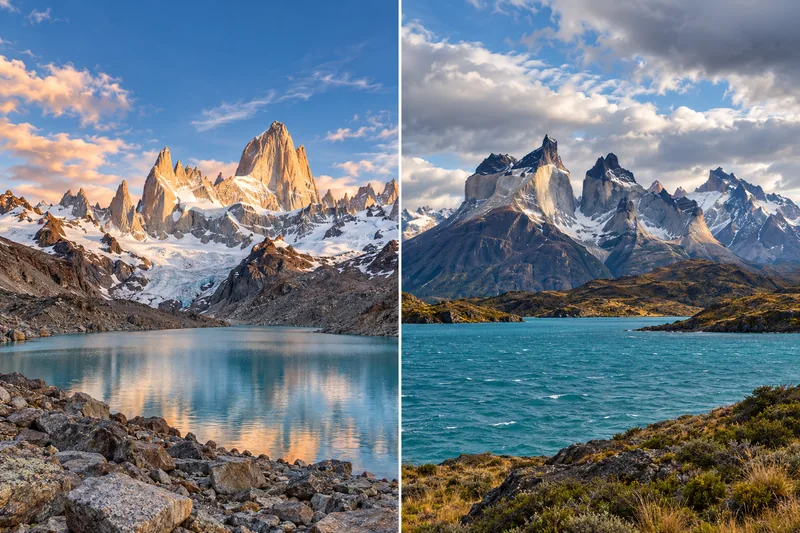
Add El Chaltén for the lower-friction extension
El Chaltén is the easier first extension for most active first-timers because it stays on the Argentina side and gives the route mountain depth without adding an international border.
Plan the El Chaltén stay by the time available:
- 1 DAY: possible;
- 2 USABLE DAYS: makes much more sense;
- 3 DAYS: stronger for serious hikers who want more weather flexibility or bigger objectives.
El Chaltén is not only for hard-core hikers. Shorter walks and viewpoints can still make the extension worthwhile when a major full-day hike is not the goal.
Choose it when mountain scenery and walking are important, but you still want the simpler extension.
Add Torres del Paine for the bigger scenery commitment
Torres del Paine asks more from the route.
The extension adds:
- an international border;
- Puerto Natales gateway logistics;
- another park transport layer;
- more dependence on booked services and current access conditions.
A ONE-DAY park snapshot is possible, but after accepting the extra logistics, 2 meaningful PARK DAYS give the extension a much better return.
You do not need to make the W trek the point of the trip. A scenic, non-trekking visit can work around viewpoints, lakes, wildlife and road-based park experiences.
Choose Torres del Paine when the Chilean park itself matters enough to justify the added friction.
When both extensions fit
At 8–9 USABLE DAYS, both can fit on paper, but this is the danger zone: transfers multiply, weather-swap options shrink and meaningful local time gets squeezed.
At 10–11 USABLE DAYS, both start to work when:
- the group is comfortable with an active route;
- key logistics line up;
- major transport and stays are organised;
- limited weather slack is acceptable.
At 12+ USABLE DAYS, both become much stronger because the route can absorb more recovery, weather change and meaningful Torres del Paine time.
Possible is not the same as practical.
This route is not only for hard-core hikers
Walking appetite should change the extension choice, not automatically cancel Patagonia.
- Lower-energy travellers: protect Perito Moreno and choose scenic viewpoints or shorter walks.
- Moderate walkers: El Chaltén can still earn its place without committing to the biggest hikes.
- Serious hikers: extra El Chaltén days gain value because weather and recovery matter.
- Non-trekkers: Torres del Paine can still work as a scenic park visit rather than a multi-day trekking project.
The route should reflect what the group actually wants to do, not the most famous hike on the map.
Check current park access
Torres del Paine trail and mountain-access rules can change with season, weather and ground conditions.
Recheck CONAF for the actual travel dates before relying on any mountain trail or circuit access; an old guide requirement, closure date or assumed reopening may no longer apply.
The route choice still depends on your priorities, usable time and the access available for your dates.
Final decision
Want the lower-friction mountain extension? Add El Chaltén.
Want the bigger cross-border park commitment? Add Torres del Paine.
Want both? Treat 10–11 USABLE DAYS as the point where the combination starts to become reasonable, and 12+ USABLE DAYS as the stronger version.
Whatever the total, protect El Calafate + Perito Moreno first, then add only the extension your usable time can actually support.