The short answer
People’s Square is JnA’s strongest all-round starting point when you have no dominant neighbourhood priority. It suits mixed sightseeing across central Shanghai.
Choose the Bund / East Nanjing Road if waterfront evenings and the iconic Shanghai setting matter most. Choose Jing’an, focused around Jing’an Temple or West Nanjing Road, if dining, shopping, cafés and west-central neighbourhood time shape the trip.
Choose the small area you will actually use, then the station and hotel. “Bund” or “Jing’an” in a property name is not enough to establish a convenient location.
In this guide
Compare the three main bases
| Base | Best reason to choose it | Main advantage | The trade-off |
|---|---|---|---|
| People’s Square 人民广场 | No single area dominates your sightseeing | Balanced access for mixed east- and west-central plans | Efficiency does not provide the Bund’s waterfront setting or Jing’an’s neighbourhood feel |
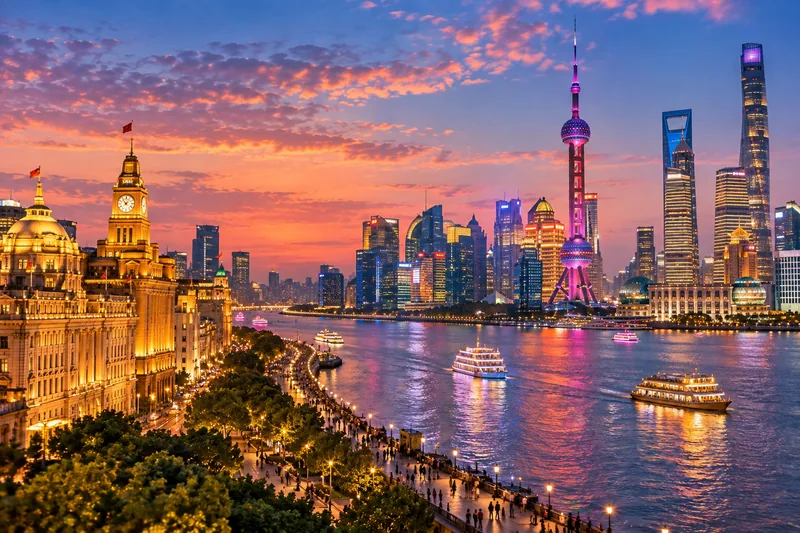
| The Bund / East Nanjing Road 外滩 / 南京东路 | Iconic Shanghai, river views and evenings near the waterfront | A strong base for Bund time and east-central sightseeing | The waterfront, useful Metro entrance and easy luggage access may not be in the same place |
| Jing’an 静安 | Dining, shopping, cafés and west-central city life | A base that supports those neighbourhood days and evenings | You give up the convenience of walking out to the Bund |
These choices answer different priorities. Airport access or a famous hotel address should refine the decision after you know which part of Shanghai you want to keep returning to.
What each choice means in practice
People’s Square: start here for a balanced first trip
People’s Square is a practical default for an itinerary moving between the Bund and Pudong on one side and Jing’an on the other. Its value is overall balance.
It is also a useful starting point if your group has mixed interests and you do not yet have one dominant evening or neighbourhood preference. That does not mean it wins every category: choose the Bund for waterfront atmosphere or Jing’an for a more west-central routine when either is clearly your priority.
The Bund / East Nanjing Road: choose the setting you want to revisit
This base earns its place when the Bund is more than a single sightseeing stop. If you expect to return for waterfront evenings and want east-central sightseeing to sit naturally around your hotel, the area has a strong purpose.
It also fits plans focused on Pudong / Lujiazui and the Old City. But inspect the actual block. A “Bund” hotel may involve a less useful station walk, pedestrianised access or a different arrival experience from what the name suggests.
Consider the hotel entrance, not just the building on the map. Crowds and pedestrian routes can matter when you arrive with luggage or return with tired children.
Jing’an: narrow the search to useful anchors
Jing’an suits a trip where cafés, dining, shopping and neighbourhood evenings are a substantial part of the experience. Start the hotel search around Jing’an Temple 静安寺 or West Nanjing Road 南京西路, then test the particular location.
“Jing’an District” covers a wider area than either of these anchors. Two hotels using the district name can support very different daily routines.
Choose Jing’an when its west-central setting is a benefit you will use repeatedly. Expect to travel to the Bund rather than treating it as an effortless walk from every property.
Xintiandi: a strong fourth option for a specific purpose
Xintiandi 新天地 is worth considering for dining, historic-lane atmosphere, Huaihai Road / central Huangpu and slower neighbourhood time.
It is a purpose-led alternative. It does not automatically replace the three main bases as the most efficient answer for a mixed first trip.
Use the Metro station as a search anchor
Station names are useful hotel-search anchors, but they do not establish the walk from a particular property, the best entrance with luggage or the service available at your arrival time. People’s Square, East Nanjing Road, Jing’an Temple, West Nanjing Road and Xintiandi remain useful anchors for the stay decisions described above.
Check the current Metro connection for your airport terminal, railway station and hotel before travel.
Let your actual arrival point refine the choice
Flying into Shanghai
Airport connectivity can refine the choice, but the useful route depends on your actual terminal, hotel and travel time. Check the terminal first, then the current journey and final connection to your hotel.
Airport access helps explain why several central bases can work. It does not make one of them the universal winner.
Arriving or leaving by train
Read the full station name on the ticket. Shanghai Hongqiao Railway Station 上海虹桥站 and Shanghai Railway Station 上海站 are different arrival points, and the practical journey to your hotel can differ.
“Shanghai train station” is too vague to plan a departure. The actual station, luggage and onward timing determine whether the final journey is convenient.
One base or a hotel change?
For most first trips, one Shanghai base is enough. Choose it around the sightseeing and evenings you expect to repeat.
One Disney day usually does not justify moving hotels. Keep the central base that works for the wider trip. If Disney dominates the visit, accommodation becomes a separate decision and the central-city default should be reconsidered.
For one Disney day, keep the city base when your group can manage the early start and late return. One nearby night can buy sleep and a calmer start before the park day, or an easier late return and recovery afterwards. Two nearby nights need both benefits to matter independently and justify the extra city time lost; children or already making a move are not enough by themselves.
Weigh those gains against packing, checkout, luggage transfer, check-in and the city evening or morning you lose. Check the actual hotel-to-park journey and gateway order. Official resort hotels, genuinely nearby nonofficial hotels and peripheral shuttle- or ride-dependent hotels can create different journeys; confirm any shuttle or hotel benefit you rely on.
These one- and two-night choices concern the ends of the Disney day. There is no total-Shanghai duration or night-count threshold behind this advice.
The five-part hotel test
- Purpose: does this area match the part of Shanghai you expect to use most?
- Actual pin: where is the hotel entrance within the advertised neighbourhood?
- Useful station: which station and entrance serve your real trips, rather than simply being nearest?
- Luggage and vehicle access: can you arrive, leave and use a taxi or ride-hailing pickup conveniently?
- Repeated movement: does this location reduce the cross-city trips your itinerary would otherwise create?
With children or mixed energy levels, fewer awkward transfers can matter more than the prestige of the address. Keep a practical return option for late evenings. Check date-specific access notices if travelling during a major holiday.
Your final decision
With no strong area priority, start at People’s Square. For Bund evenings and iconic Shanghai close to the hotel, choose the Bund / East Nanjing Road. For dining and west-central neighbourhood life, choose Jing’an around a useful anchor.
Then test the exact hotel. The right area is only useful when the entrance, station and daily routine work together.