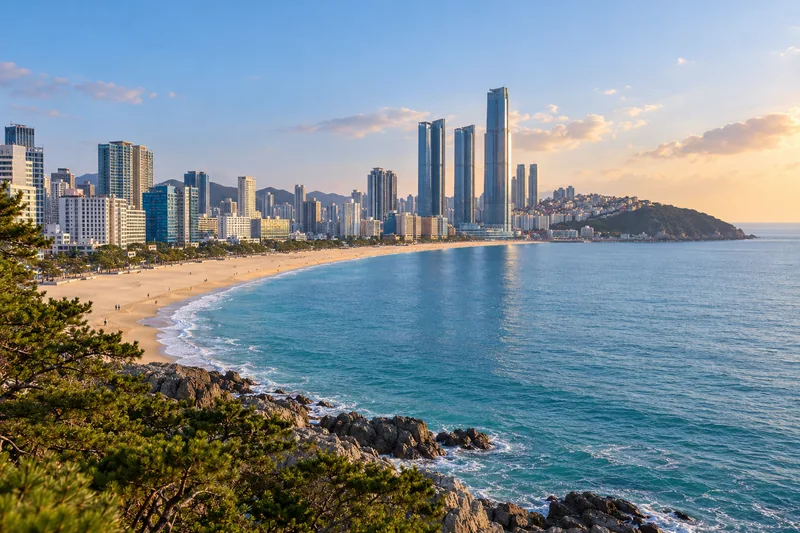
Start with three full usable days for a rounded first Busan visit. Two can work if you accept a selective trip. A fourth earns its place through slower coastal or cultural depth, recovery time or weather flexibility. If historic contrast matters more, compare that extra Busan day with a full-day Gyeongju excursion.
In this guide
Count full usable Busan days
A full usable day normally means waking in Busan with sightseeing time from morning to evening, including meals, breaks and ordinary movement around the city.
A late arrival, early departure or transfer-heavy half day does not count the same way. Two hotel nights with a late arrival and early departure do not create two full sightseeing days. Major coastal disruption can also reduce what a planned day delivers.
| Full usable Busan days | Best fit | What the time buys |
|---|---|---|
| 2 | A selective stop within a wider Korea trip | One east-coast day and one west/old-city day, with real omissions. |
| 3 | The strongest general starting point | Room for a missing cluster or priority, less compression and a more natural pace. |
| 4 | Slower depth or extra flexibility | More coastal or cultural time, easier group pacing and room to rearrange plans. |
Two days: protect two distinct sides of the city
Busan's east coast and west/old-city areas are not one compact walking zone. Repeatedly crossing between them can consume the time a short visit is trying to protect.
Give one day to a selective east-coast plan, such as Haeundae, a coastal walk and Gwangalli. Give the other to the west/old-city side, centred on Nampo/Jagalchi with one chosen hillside neighbourhood.
These are clusters to prioritise, not a requirement to visit every named place. Each extra detour should displace something else rather than lengthen an already full day.
The trade-off is less slow beach time, fewer recovery breaks and little room to absorb poor coastal weather. Two days is defensible for travellers with clear priorities who are comfortable leaving things out.
The third day buys balance
With three days, keep the east-coast and old-city cores, then use the extra day for the part that would otherwise be squeezed out: another coastal or cultural priority, deeper neighbourhood time, or a less hurried version of the same visit.
The gain is not simply a longer attraction list. Grouping sights more sensibly leaves room for food, cafés, photographs and rest. It also gives you some freedom to change the sequence when weather or energy weakens a day.
The fourth day: Busan depth or Gyeongju?
Stay in Busan when you want slower beach and coastal time, more cultural depth, relaxed evenings or an easier pace for children and mixed-energy travellers. Keep it as flexible time when the coast is a major priority and you want another weather opportunity.
Choose Gyeongju when Silla heritage and tomb-park atmosphere matter more than another Busan day, and you are willing to commit the whole extra day to that contrast.
Count the complete excursion: reaching the departure point, waiting, travelling, reaching the sights, sightseeing and returning to your Busan base. A short headline journey does not make it a short outing. Choose a coherent historic-core visit instead of trying to cover everything.
That choice gives you three full Busan days plus a Gyeongju excursion, rather than four full sightseeing days in Busan.
Let pace change the choice
Hot conditions, rain or wind, regular rest needs and a strong preference for coastal time can make a third or fourth day more valuable. Plan around the group's sustainable pace.
Choose a practical base for your priority areas and avoid changing hotels merely to solve a short trip's geography. Base location can reduce repeated travel, but it cannot create a missing full day.
If you are unsure, protect three full usable Busan days, then give any extra day one clear purpose.